Designing for disability / 2024
Assistive Tech
Designing a bra-dressing tool with Jessica and the Right Footed Foundation to support independent dressing for women without arms.
Creative Technologist
Right Footed Foundation
Independent dressing
Co-design + prototyping
Fastening a bra is an everyday task built around assumptions about bodies and dexterity. This project develops a practical tool that supports autonomy while respecting the strategies users already employ.
The questionHow might we reduce the effort of securing a bra without prescribing a single way of dressing or designing from assumptions rather than lived experience?
Design with the user’s existing methods, not against them.
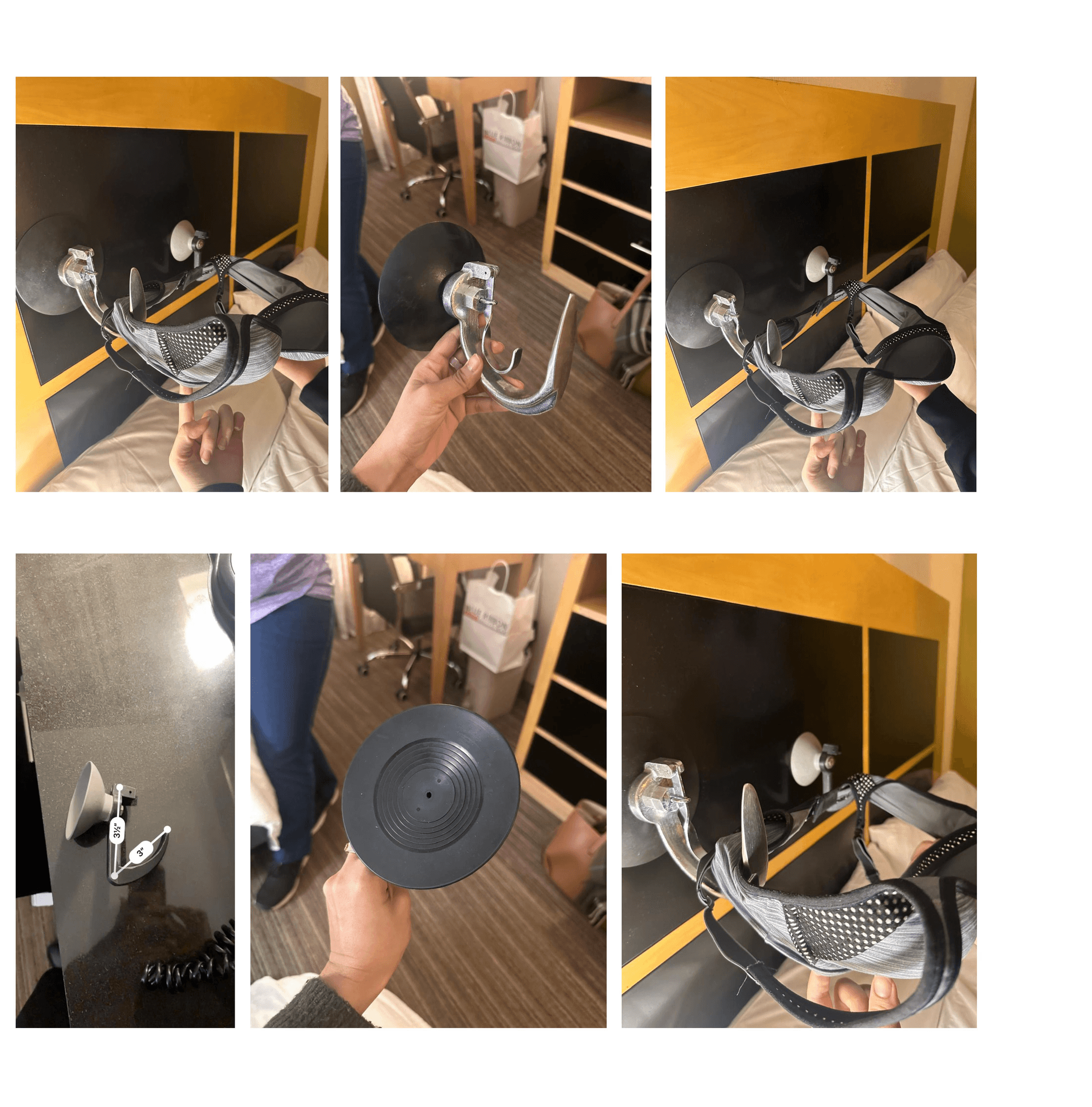
We studied one-handed fastening aids, folding dressing sticks, and dressing trees, then returned to the hook Jessica already used in her routine. The opportunity was not another generalized assistive product. It was a stable extension that could hold the bra open, reduce reliance on another person, and work with the way she already dressed.
Create tension without adding complexity.
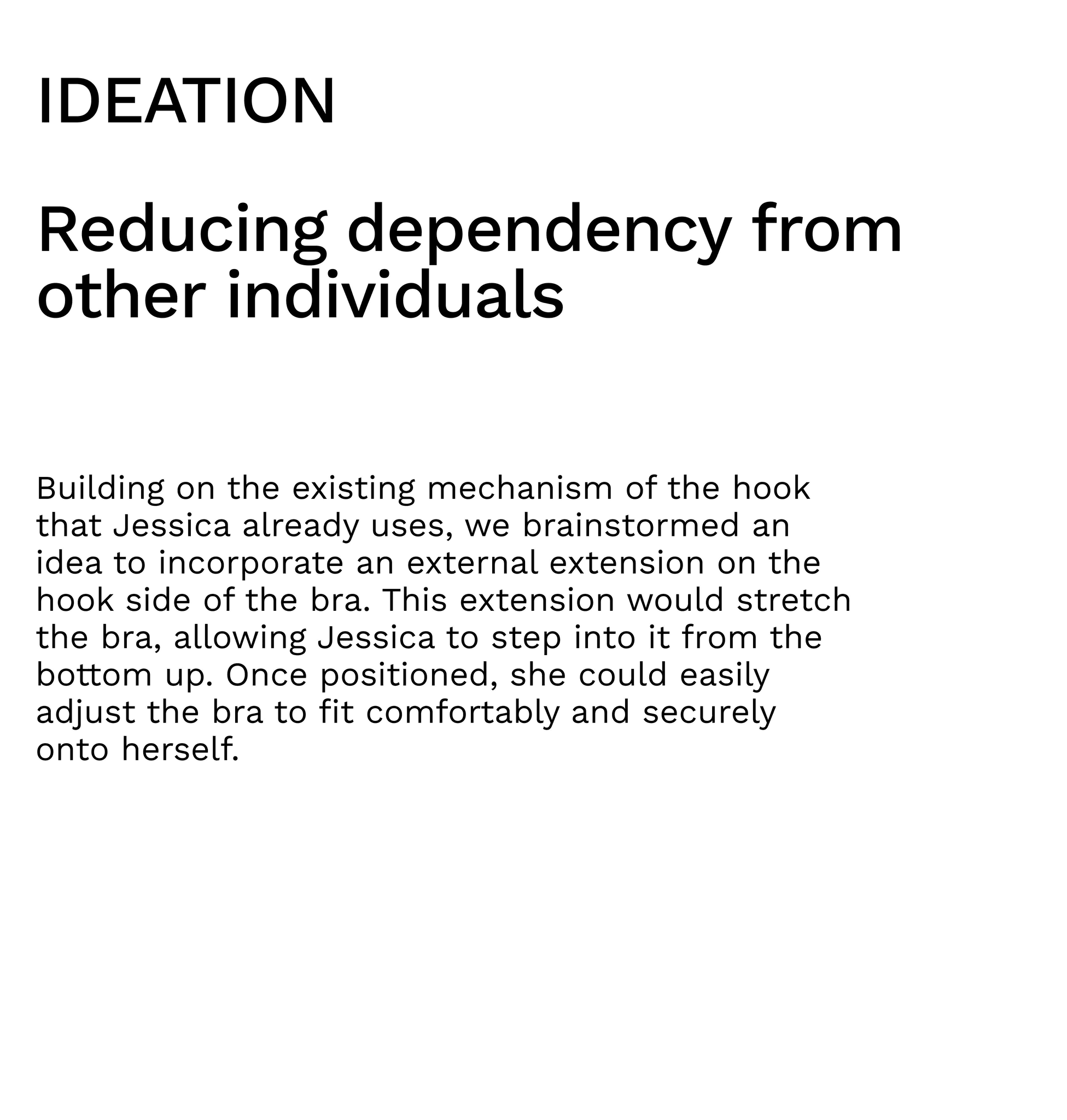
The concept combines an external hook with a surface-mounted base. It stretches and stabilizes the bra so Jessica can step into it from below, then adjust it comfortably into place. Early prototypes tested the hook angle, the distance from the wall, and the amount of tension needed to hold the garment securely.
Shape every detail around the routine.
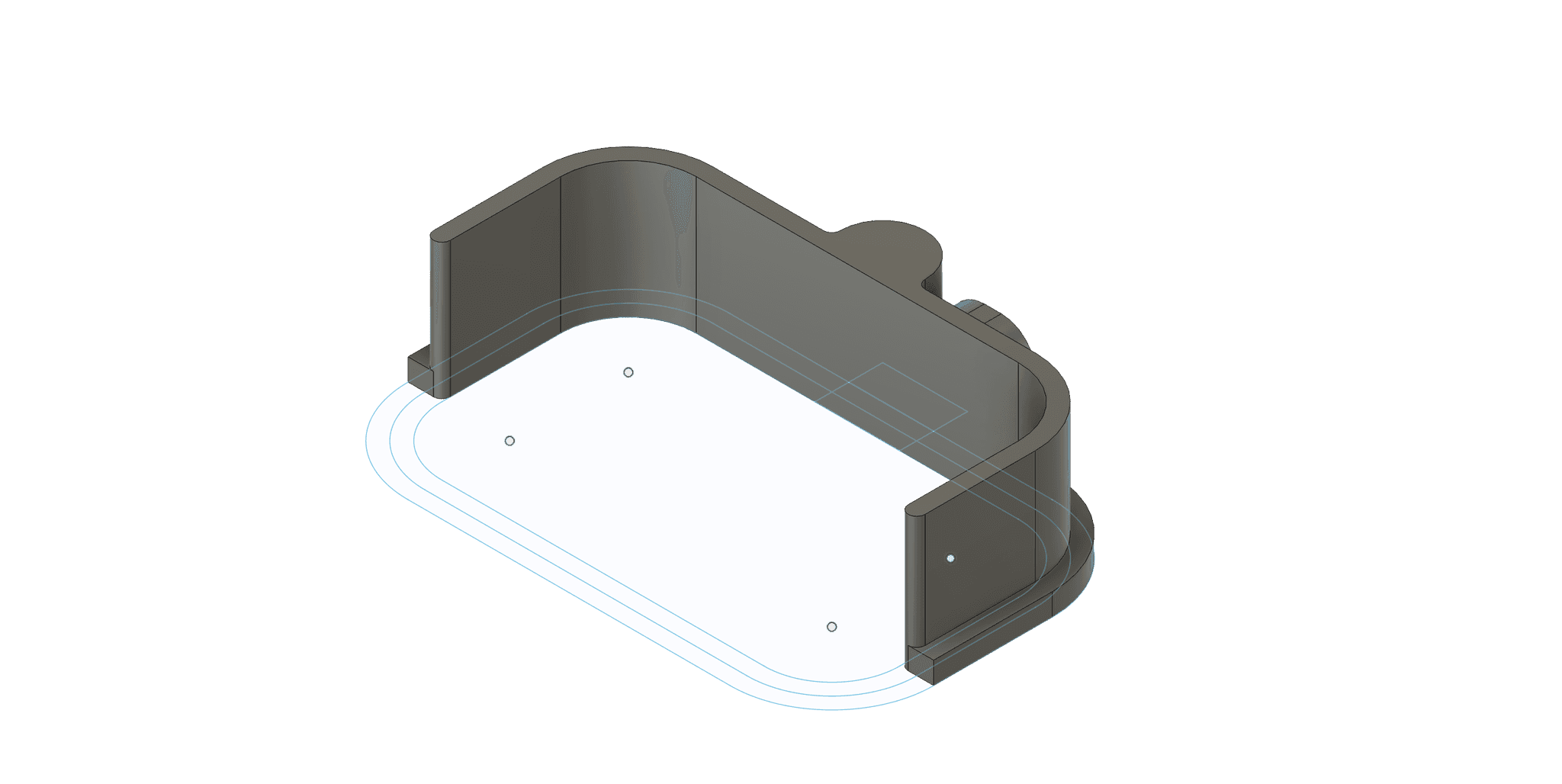
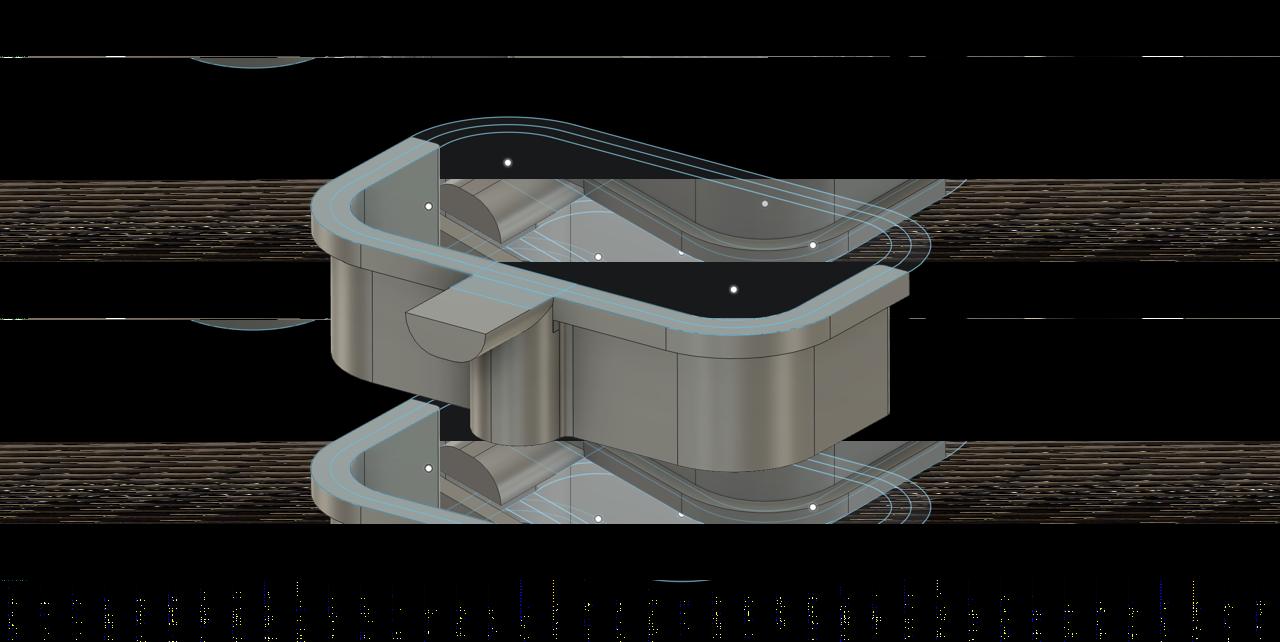
The refined direction uses a suction mechanism for a stable removable base, an adjustable position, and a curved form shaped around Jessica’s body. The dimensions were personalized to her measurements so the object could support the task without becoming another obstacle within it.
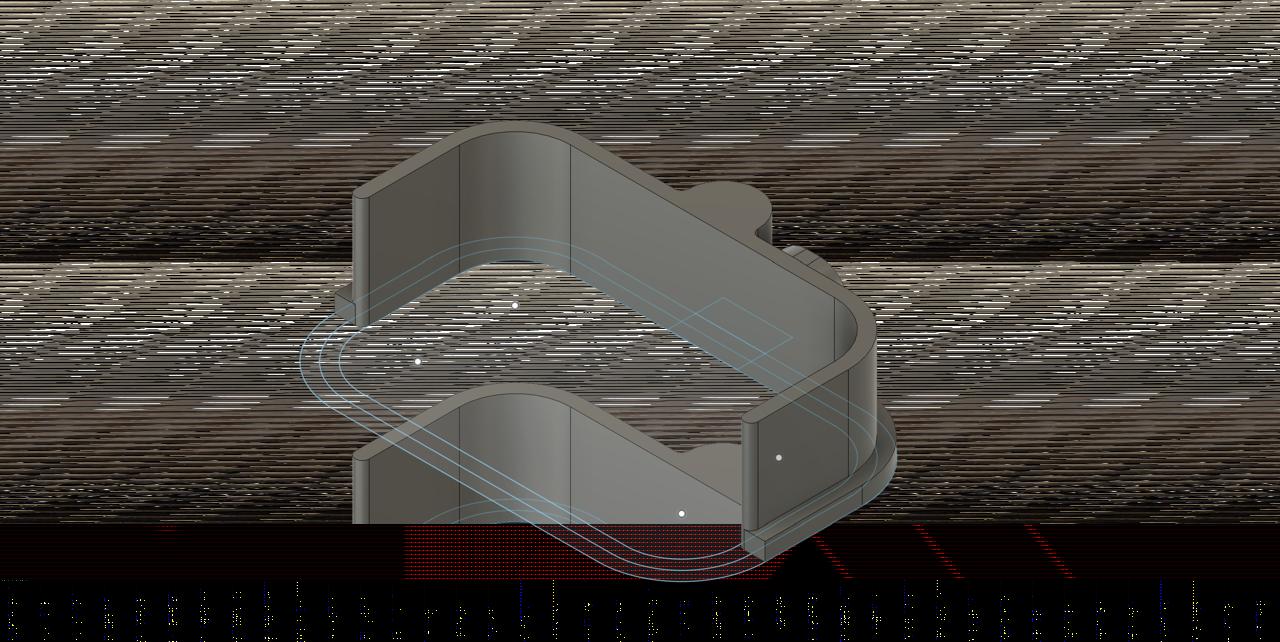
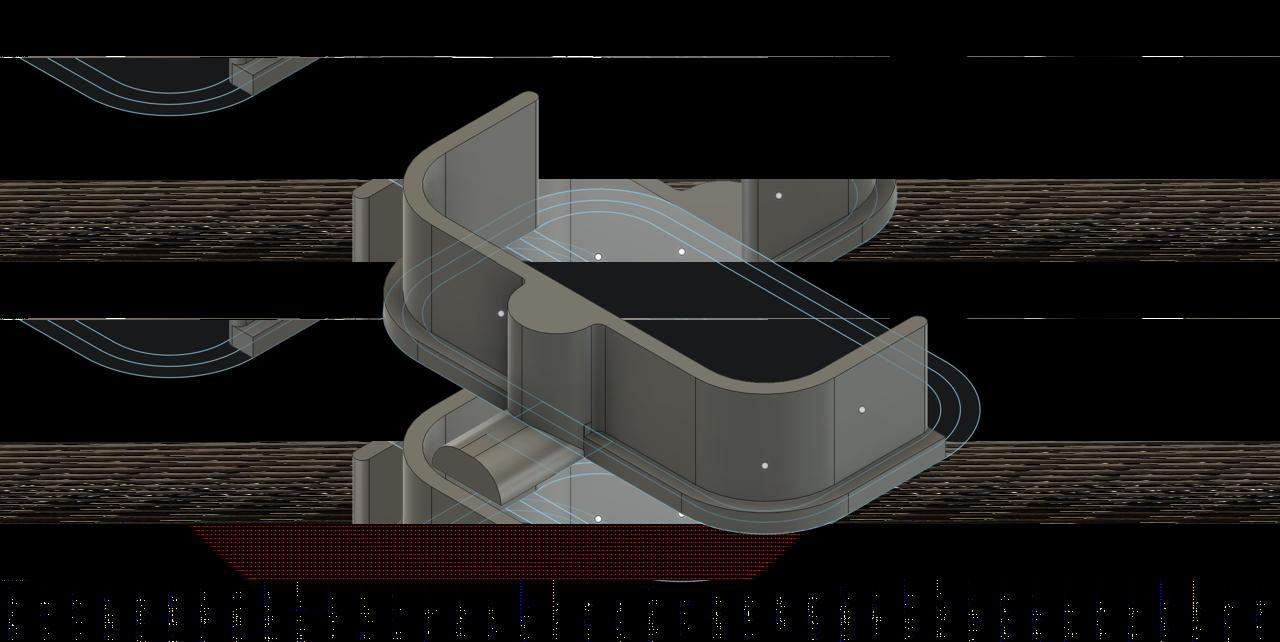
The tool needs to work within Jessica’s routine.
Working with Jessica helped us test the tool against her routine. Her feedback guided the hook, its placement, and the way the base attaches to a surface.