Interactive installation / 2025
The Space Between Us
An interactive installation about vulnerability, anonymous reflection, and the quiet connection of recognizing yourself in someone else’s words.
Concept, research, design + development
Interactive installation
p5.js, ml5.js, Node.js, Fastify
NYU ITP Thesis Show
The project did not begin as an installation about anonymous responses. It began with ordinary objects and a question about what the things we keep can reveal about us. Participant conversations changed its direction.
The questionHow might a public installation create enough privacy for honest reflection, while allowing even a passing encounter with someone else’s words to feel meaningful?
I began with the objects people leave behind.
I brought together ordinary objects including a vintage camera, jewelry, and postcards. Some were familiar, some less so. I used prompts to ask what an object reminded someone of, what they should have let go of, or which object might explain who they were.
I expected the objects themselves to hold the conversation. Instead, they mostly acted as a way in.
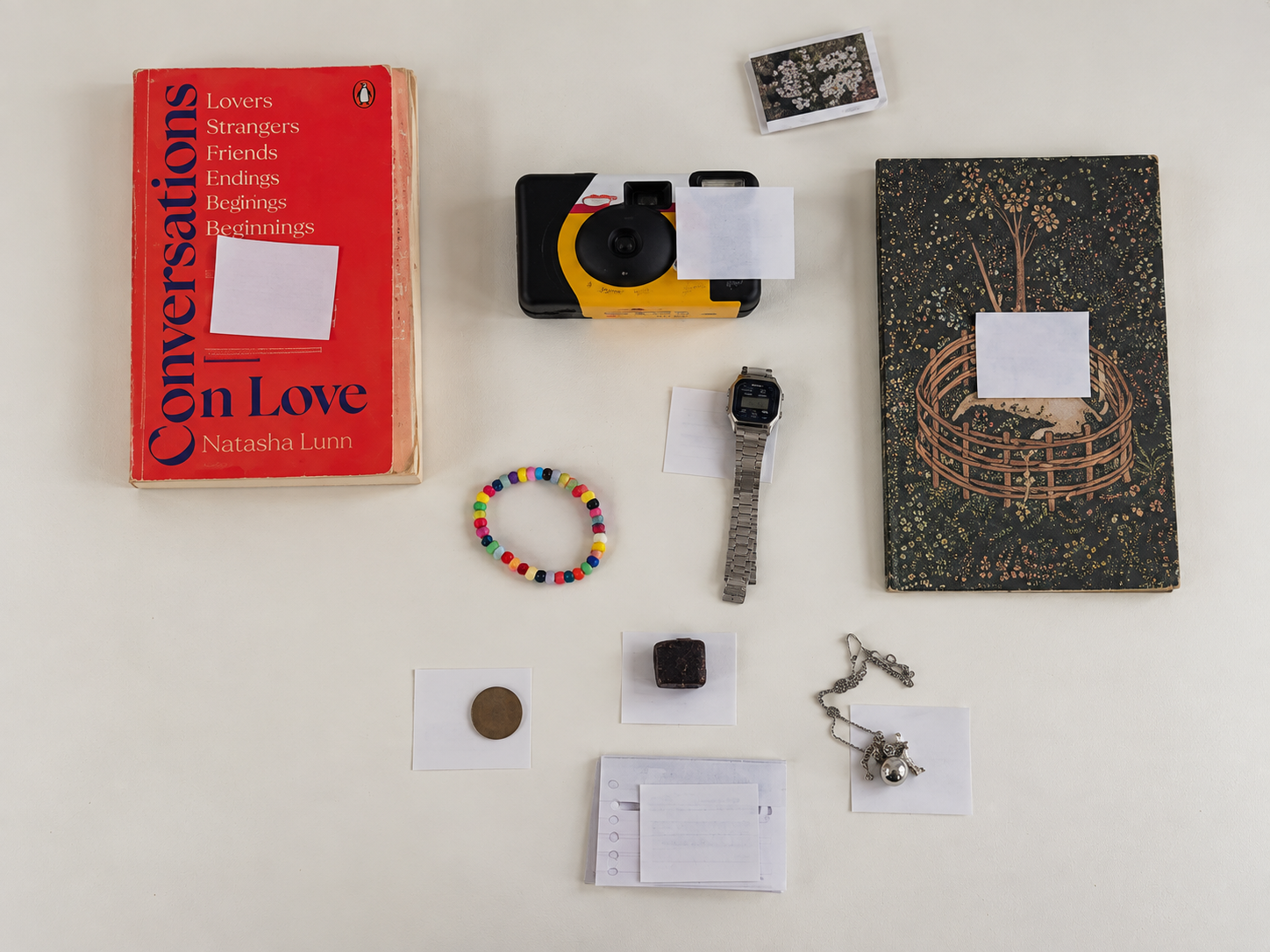
The objects felt quiet. The prompts gave them a voice.
The same pattern kept repeating. People moved quickly from the object to childhood, grandparents, relationships, and personal memories. One person spoke about a piece of jewelry handed down by their grandparents. What mattered was not the object on its own, but the person, feeling, or history attached to it.
People were often responding more strongly to my words and questions than to the original objects. That contradiction changed the project: I stopped asking how objects carry memory and began asking what helps people share the feelings around those memories.
I removed the objects and let the responses build on one another.
I began leaving light, quickly answered prompts on whiteboards around the NYU ITP floor. Responses were anonymous. At first people were hesitant, but the questions kept reappearing and gradually became familiar.
Some answers built on what was already there; others stood alone. The test showed me that participation did not need to begin with a large emotional ask. A recurring invitation and the visible presence of earlier responses could make contributing feel safer.
The phone became a refuge inside a public experience.
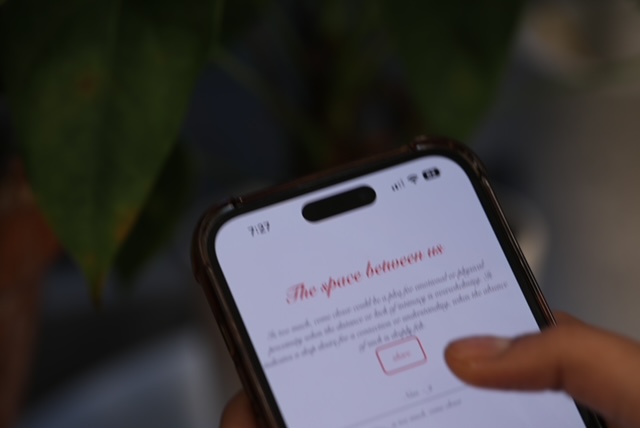
I wanted the final work to be publicly encountered without requiring people to perform vulnerability in front of a room. Phones already function as a small escape in uncomfortable situations, so the response experience lived there.
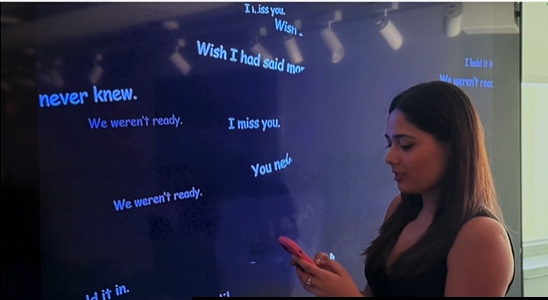
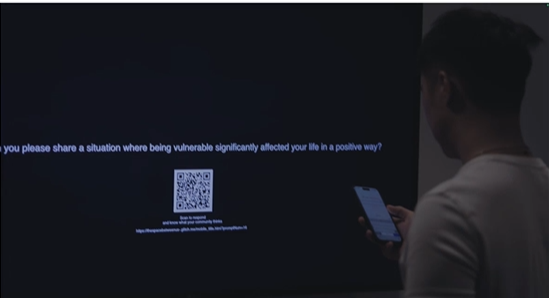
Visitors first encountered floating fragments from the shared archive. Only after they paused or approached did a QR code gently appear. The words remained the main invitation; participation came second. On the phone, a visitor could respond privately and receive a reflection connected to their own experience before their words joined the public archive.
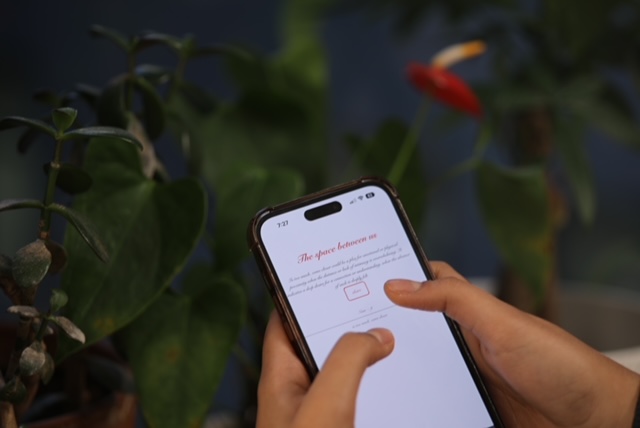
Some people contributed. Many simply stopped and read.
At the final installation, people paused in front of the drifting fragments. Some scanned the code and became part of the archive. Others watched, read, hesitated, discussed what they saw, or moved on without submitting anything.
That was not a lesser form of participation. The project was about connection and vulnerability, and those could begin in the moment someone recognized their own experience in a stranger’s words.
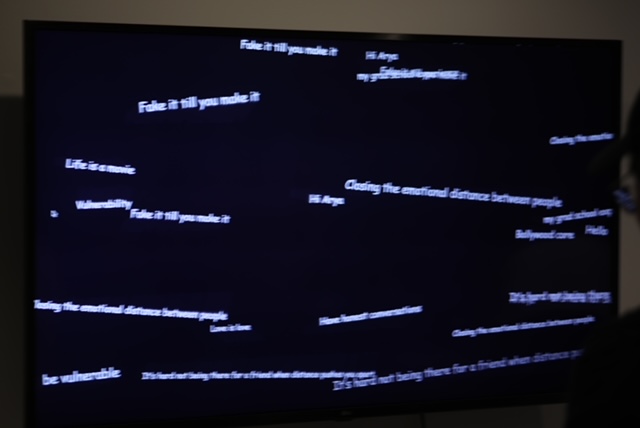
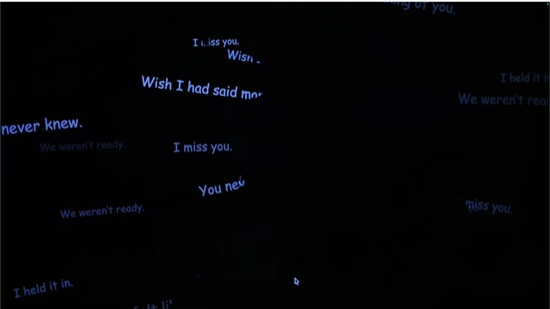
Designing for connection is not the same as designing for engagement.
I began by trying to make objects speak. The project became more meaningful when I listened to where people naturally took the conversation and removed what was no longer serving it.
The final experience taught me that contribution is only one measure of participation. Sometimes witnessing is enough. A person can feel less alone without leaving a response of their own.
View NYU thesis archive ↗